
Netflix’s Road to $1 Trillion: Why NFLX Could Be Your Next Big Winner
The Reality Check on Palantir’s Trillion-Dollar Dreams
Look, I get the excitement around Palantir. The stock has been absolutely electric, and the AI story is compelling. But let me be straight with you – with only a handful of companies currently in the exclusive $4+ trillion club (Nvidia, Microsoft) and Palantir trading at over 100x revenue, the math just doesn’t work for a 2030 timeline.
Here’s the brutal truth: Palantir would need to sustain that insane valuation multiple while doubling its market cap. When you’re already priced for perfection, the only direction is down when growth inevitably slows. I’ve seen this movie before with high-multiple growth stocks, and it rarely ends well for late-stage buyers.
Why Netflix Is the Smarter Bet
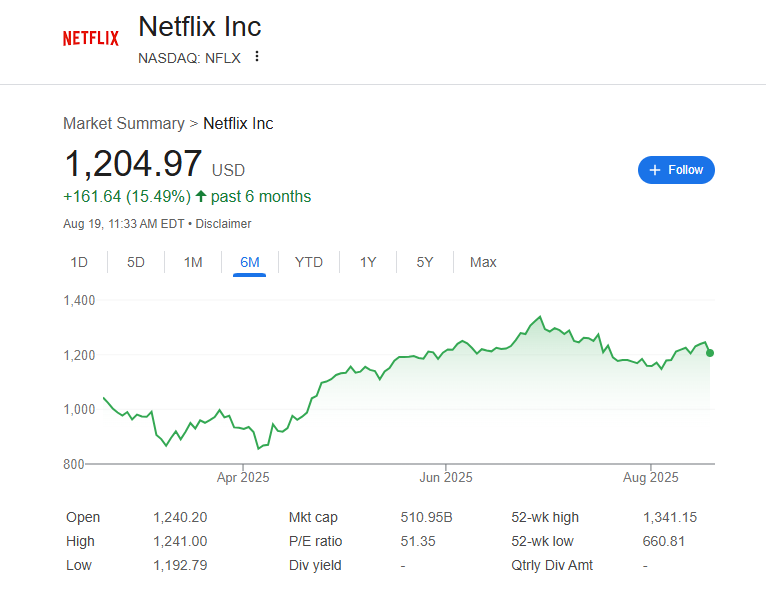
While everyone’s chasing the latest AI darling, Netflix quietly delivered a 16% revenue beat in Q2 2025 and raised its full-year guidance to $44.8-45.2 billion. This isn’t sexy, but it’s exactly the kind of systematic execution that builds trillion-dollar companies.
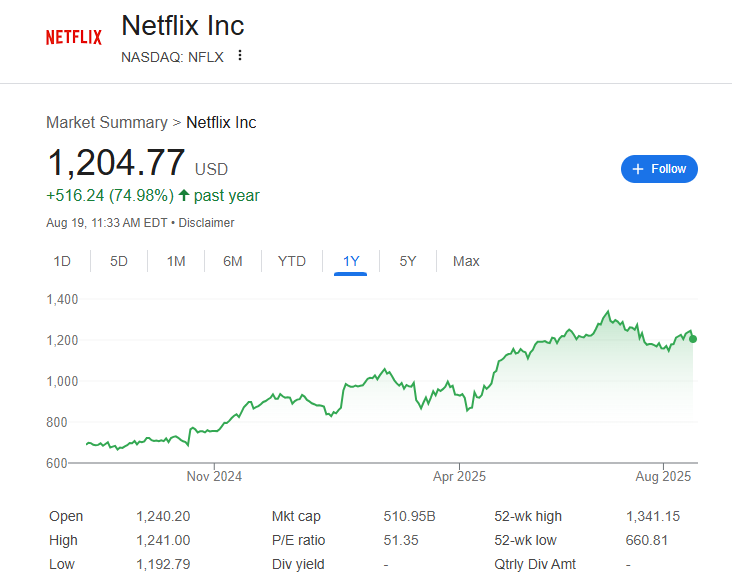
Netflix currently sits at around $520 billion market cap, meaning it needs to roughly double to hit that magic $1 trillion mark. Here’s why that’s not just possible, but probable by 2030.
The Netflix Playbook That Actually Works
1. The Pricing Power Play
Netflix has cracked the code on something most companies can only dream of – consistent price increases without subscriber revolt. They’ve been systematically raising prices for a decade while maintaining incredibly high retention rates. This isn’t luck; it’s a moat.
Think about it from a trader’s perspective: when you find a company that can predictably increase prices while growing its customer base, you’re looking at a compounding machine. Every price increase flows directly to the bottom line because the infrastructure is already built.
2. The Advertising Goldmine
Here’s where it gets really interesting for growth investors. Netflix is targeting to double its ad revenue each year, aiming for $9 billion by fiscal 2030. They’re starting from a small base, which means massive percentage growth ahead.
The company launched its in-house ad technology this year, giving them complete control over targeting, measurement, and ad formats. This is huge – they’re not splitting revenue with third-party ad platforms anymore. Every dollar of ad growth goes straight to their pocket.
3. The Live Content Strategy
Netflix is doubling down on live sports and events, including WWE matches and NFL games. This isn’t just about content – it’s about advertising premiums. Live events command significantly higher ad rates than on-demand content, and they create appointment viewing that’s incredibly valuable to advertisers.
The Numbers That Matter
Netflix’s management has laid out a roadmap that’s both ambitious and achievable:
- Double 2024 revenue (putting them around $78 billion annually)
- Triple operating income with a target of 40% operating margins
- Systematic margin expansion from the current 26.7% to nearly 30% in 2025
Here’s what I love about these targets: they’re based on proven execution, not hope. Netflix has been hitting their margin targets consistently for years. This isn’t a startup promising the moon – it’s a mature company with a track record of disciplined growth.
Why the Math Works
Let’s do some back-of-the-envelope calculations. If Netflix hits their targets:
- $78 billion in revenue
- 40% operating margins = $31.2 billion in operating income
- At a reasonable 30x earnings multiple (conservative for a growth company)
- That gets you to a $936 billion market cap
Add in share buybacks from their massive free cash flow, and you’re easily over $1 trillion. The beauty is that none of these assumptions are particularly aggressive by tech stock standards.
The Trading Opportunity
For value investors: Netflix trades at a reasonable multiple compared to other streaming and media companies, especially when you factor in their margin expansion story.
For growth investors: The advertising revenue stream is still in its infancy, and the connected TV ad market has massive runway ahead as brands shift spending from linear TV.
For dividend/income focused: While Netflix doesn’t pay dividends, their share buyback program effectively returns cash to shareholders while boosting per-share metrics.
What Could Go Wrong
I’m not saying this is risk-free. Here are the real concerns:
- Competition intensification: Disney+, HBO Max, and others aren’t going away quietly
- Content cost inflation: Great content is getting more expensive, and Netflix needs to keep spending to stay ahead
- International challenges: Currency headwinds and local content requirements can be costly
- Ad market volatility: Economic downturns hit advertising budgets first
The Bottom Line for Traders
Netflix isn’t the flashiest stock in your portfolio, but it might be the most reliable path to massive gains. While everyone’s speculating on which AI stock will be the next Nvidia, Netflix is systematically building a trillion-dollar business the old-fashioned way – with predictable revenue growth, expanding margins, and disciplined capital allocation.
The company has already raised its 2025 revenue guidance to $43.5-44.5 billion, showing they’re not just meeting expectations but exceeding them consistently. This kind of execution rarely gets rewarded in the short term, but it’s exactly what creates long-term wealth.
If I’m building a portfolio for the next five years, I want companies that can deliver consistent growth without relying on market sentiment or multiple expansion. Netflix checks every box, and at current prices, it offers a much better risk-adjusted return than chasing the latest high-multiple tech darling.
The trillion-dollar club isn’t about hype – it’s about companies that can systematically compound shareholder value over time. Netflix has been doing exactly that, and they’re just getting started with advertising and international expansion.
Disclaimer: This analysis is for educational purposes only. Always conduct your own research and consider your risk tolerance before making investment decisions. Past performance doesn’t guarantee future results.